From Idea to Product: The Opine Case Study

I.Can Erdincmer
Product Designer
Read • 4 Min

What does a client actually experience when working with an industrial design studio? In the Opine project, how did we turn an early-stage product idea into a clear design direction and a distinctive user experience?
Clients don’t always come to us with a blank page. Most of the time, they already have a problem they want to solve, references they like, certain forms they have in mind, and sometimes even a specific interaction they imagine for the product. Today, some of these expectations can be visualized with AI, while sometimes they can simply be a description of a feeling.
What is usually missing from these requests, however, is the structure that connects all of these ideas together.
How can we reflect this experience in the best possible way, how can we place the user at the center of it, and most importantly, how can we create real value rather than another product that ends up unused?
Opine came to us with the idea of a filtered shower head. This is already an existing product category, but our client approached us with an experience problem and a gap they saw in the broader market: making the filter easy to replace and creating a stronger relationship between that experience and the brand.
Our role was to give that idea a clear direction, test it from different perspectives, and guide the client through the decisions needed to turn it into a real product.
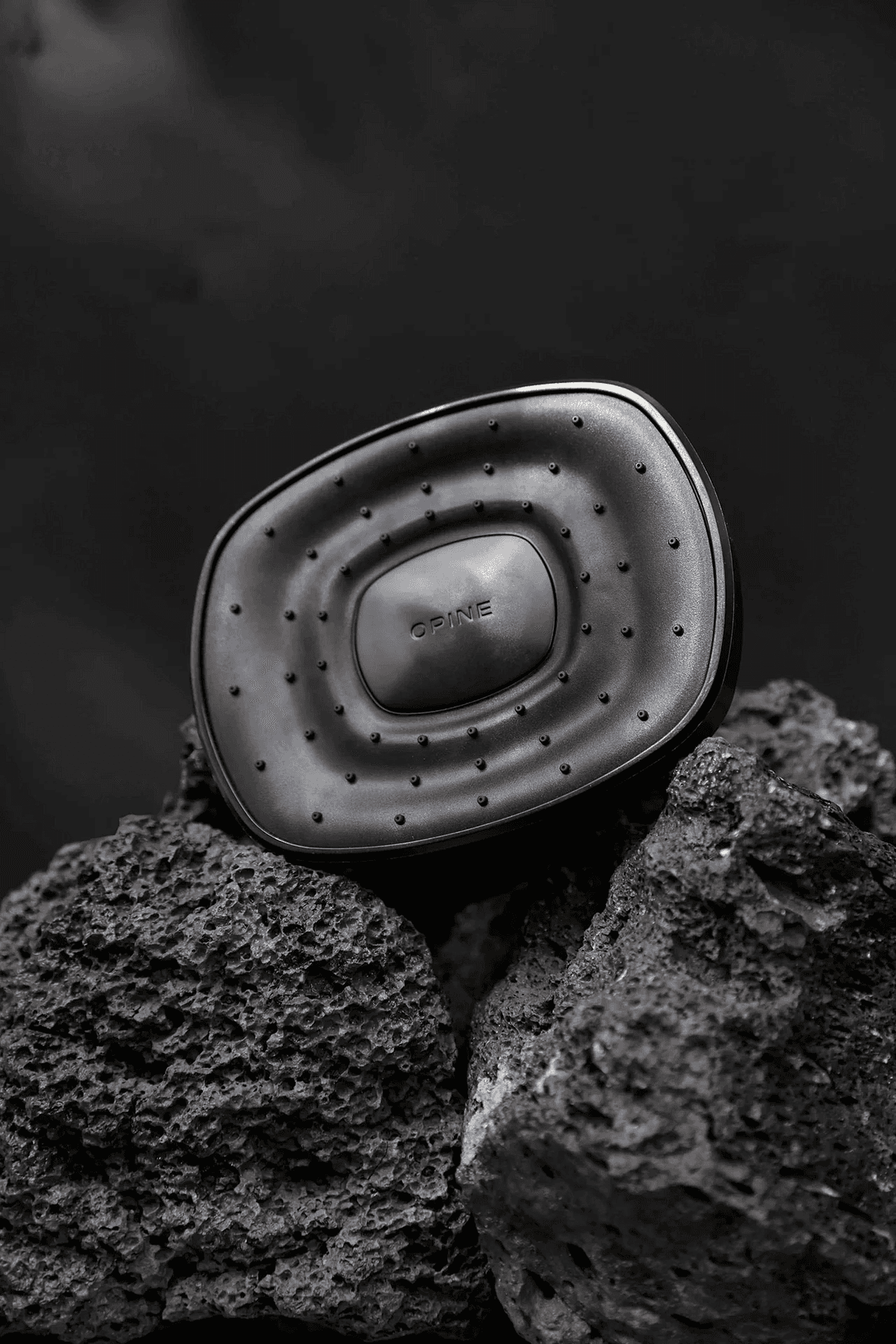
Image courtesy of Opine — opineway.com
Opine was developed not simply as a technical bathroom product, but as part of a daily personal care routine.
Starting With the Real Question Behind the Brief
A shower head is one of those products whose appearance is almost predetermined. Users already know how they expect it to look and how they expect it to work.
That familiarity creates a difficult balance. If you move too far away from the familiar form, the product can start to feel like it doesn’t belong in a bathroom. If you stay too close to it, it disappears among dozens of similar options.
This was the first problem we defined together with the Opine team. Was the brand going to position itself as a bathroom accessories brand or as a personal care brand?
The answer was very clear. Opine did not want the shower head to be perceived simply as a technical device that filters water. The product needed to become part of the user’s skin and hair care routine.
For this reason, before moving into form development, we defined the space the product needed to occupy. It had to look like it belonged in the bathroom, communicate its function, and feel more like a personal care object than a traditional bathroom product.
Answering these questions at the beginning gave both teams a common ground that we could use to evaluate every decision that followed.
Giving the Client Real Alternatives
The purpose of developing multiple concepts is not simply to increase the number of options. Showing a client three very similar variations of the same idea doesn’t help them make a better decision.
Each concept should represent a real alternative.
Based on the gaps we identified during market research and the user profiles we created, we developed three different directions for Opine. Each one represented not only a different form, but also a different possibility for the future of the brand.

Image courtesy of Opine — opineway.com
The first concept had a minimal approach centered around function. Its controlled and simple form kept the product familiar enough to fit naturally into everyday use. It was also the option that aligned most closely with the general form and logo usage the client had in mind at the beginning of the project.
For the second concept, we used a more natural and organic form language. Combined with a bold material approach, it had the strongest expression of the three options. It had the potential to stand out on its own and even become a “hero product” around which the rest of the brand could be built.
The third concept made the technical capabilities of the product more visible. It was sharper, more technological, and communicated its function more directly.
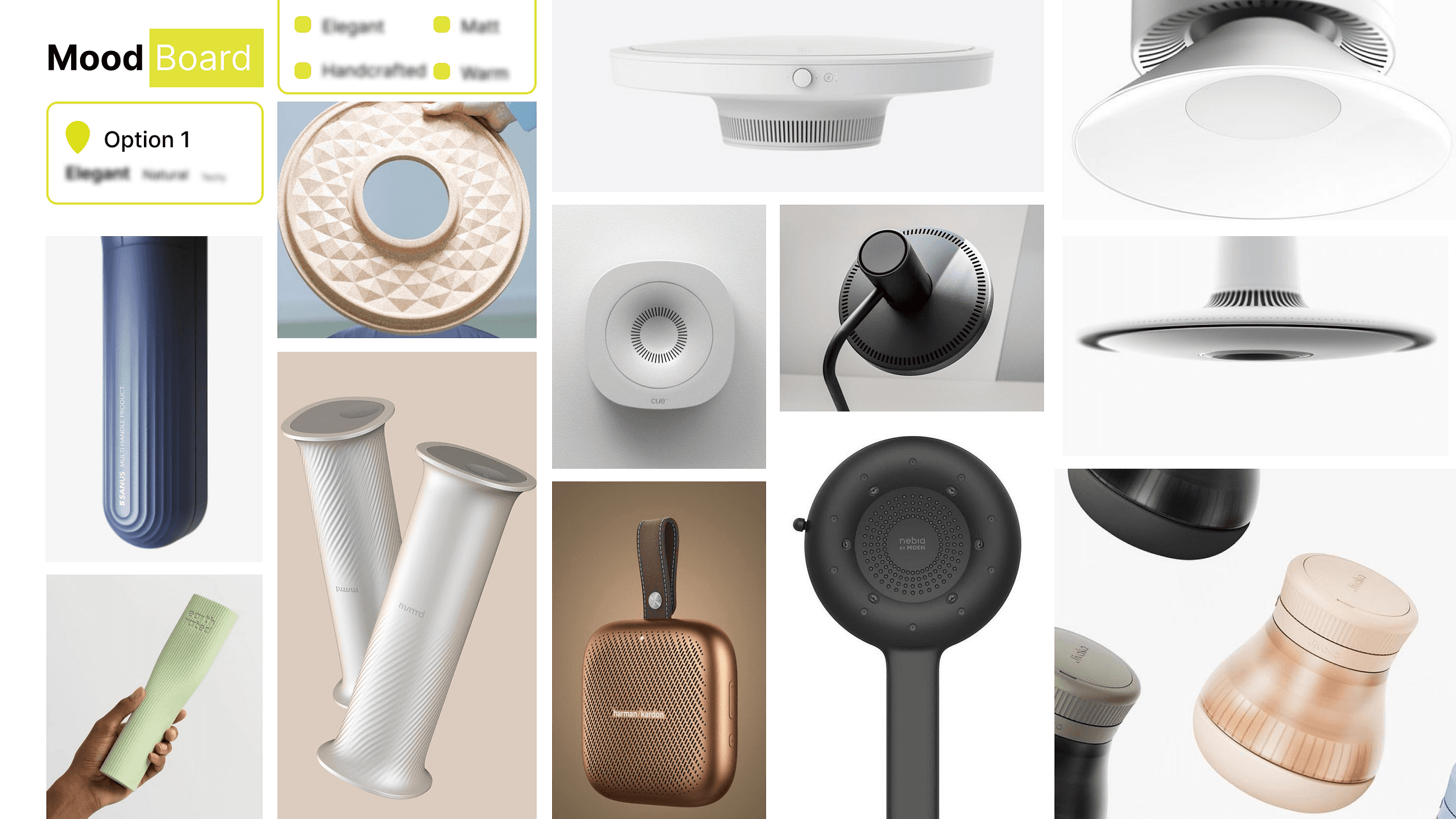
Three different answers to the same brief: minimal, natural, and technology-focused.
All three directions were valid in their own way and responded to the brief. But concepts cannot be evaluated only by how impressive they look on their own. What mattered here was how they could work together with the other products Opine might develop in the future.
Both teams really liked the natural and organic concept. It was visually strong and easy to remember. Even so, we felt that it could become too dominant within a future product family.
Some brands deliberately build their entire communication around one iconic product. For Opine, however, it was important to create a more balanced family where future products could also have their own place.
The technological concept also had a strong identity, but it felt more masculine. That direction did not fully support the inclusive and approachable relationship Opine wanted to build within the personal care market.
After evaluating the three directions, we decided to move forward with Option 1, which had a more minimal and direct structure. It was the right choice both for creating an iconic shape for the brand and for moving away from the complicated appearance of many filtered shower heads. From this point onward, our focus was to strengthen the selected direction through the way the product was used and through CMF development, without changing its character, and to bring it one step closer to reality.
Turning a Concept Into a Real Product
Selecting a concept does not mean the design is finished. In fact, it means you have reached the point where the product can really start to be resolved.
This selection also creates an important change for the client. Choosing and locking the overall look and feel during the concept stage speeds up the process and prevents the project from constantly going backwards at every step.
So how should we move forward after that? Concept designs may show the direction, but they should never become untouchable. They are more like a preview of the real product, and to take the product to its final stage we need to be able to ask the right questions. Does this detail support the character we selected? Does it make the product easier to understand? Does a change required by engineering strengthen the design, or does it move us away from the original intention?
With Opine, the water outlet surface, the filter replacement experience, and the internal volume required by the filter all had to be resolved within the same form. A change in one of these areas affected the others as well.
Our job was to maintain the relationship between these decisions as the product became more detailed and to prevent the selected concept from losing its clarity.
Developing an Idea
One of the most important features that differentiated Opine from similar products was the way the filter could be removed and replaced.
This was actually one of the problems defined from the very beginning of the project. As the design process progressed, the solutions we developed for this problem came together to form the concepts, the concepts developed into a technical structure, the technical structures became the first prototypes, and the prototypes eventually became the final product.
How will the user access the filter? What movement will they make? When they use the product for the first time, will they understand what they need to do? Can we remove any step entirely? The most important thing here was that the system needed to work completely and also make sense to the user.
Together with the mechanical engineering team, we developed the client’s initial idea into a cleaner and more direct system. The filter became easy to remove and reinstall without requiring a complicated mechanism or a long sequence of actions. Since this interaction happens through the center of the product, we developed the mechanism so that the filter could be released by pressing through the base where the logo is located, and we explored different ways of pressing it before arriving at the final solution. Feedback from the engineering team, the filter dimensions, the space we needed, and the surfaces both inside and outside the product were all examined and developed one by one in order to create the overall experience.
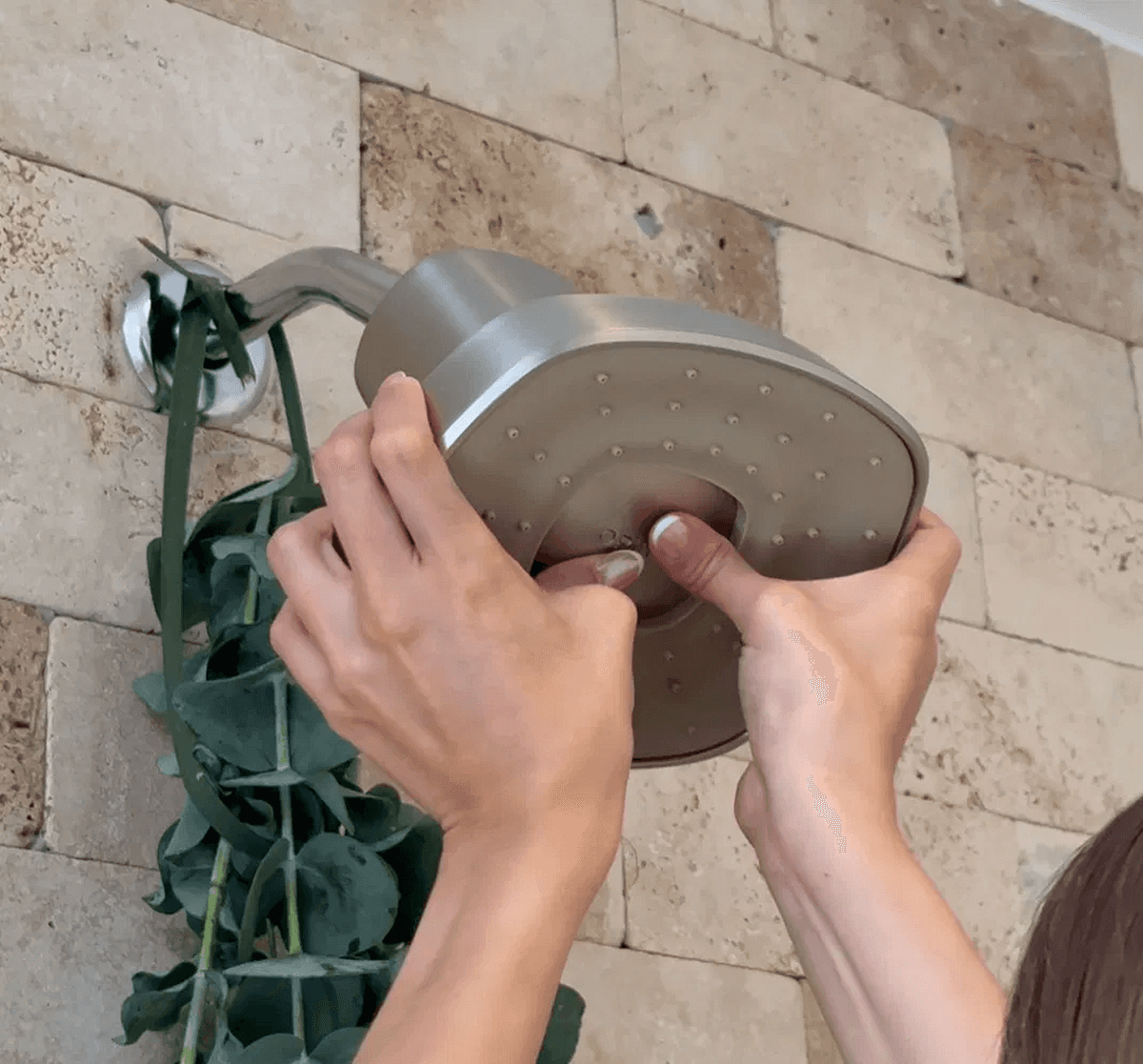
The new filter replacement experience not only solved the problem, but also positioned the brand differently in the user’s mind.
This part of the project summarizes our approach to collaboration well. The client does not hand over an idea and disappear until the final presentation. Their knowledge, priorities, and original intention continue to remain part of the product.
We see it as a priority to move through the process together with the brand as one team, to listen to our clients throughout the design process, to build the process around their expectations and feelings, and when necessary, to create an entirely new vision from the beginning. We believe this makes the design process much closer to the user.
Protecting the Design Language Through the Engineering Process
The engineering process inevitably changes a product. What matters is managing these changes as a natural part of the design process and making sure the original concept does not gradually lose its character.
Filtered shower heads can be larger than standard shower heads because of the components they need to contain. One of the main mechanical challenges with Opine was finding the right balance between the size of the filter and the external form.
We could not remove the internal volume required by the filter. At the same time, we did not want the product to look bulky, swollen, or visually heavy.
For this reason, we did not follow a linear process where we finished the exterior form and then handed it over to the mechanical team. As the filter, connections, and internal layout developed, we also continued to adjust the external surfaces according to those changes.
We maintained the connection between the technical requirements of the product and its visual character. Whenever something changed internally, we reconsidered how that change affected the proportions, surface transitions, and the overall feeling of the product.
Our goal was not to hide the technical volume. It was to make it part of a controlled and intentional form.
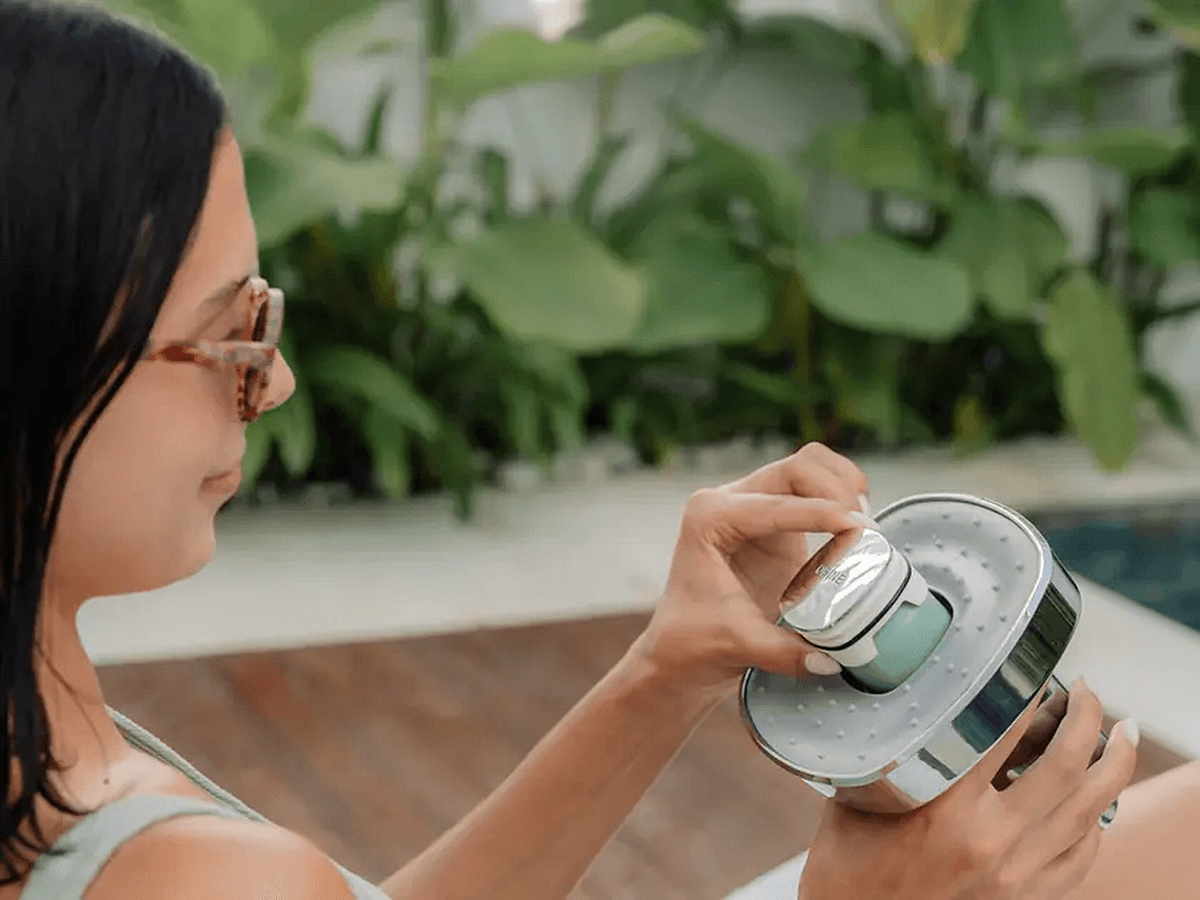
Image courtesy of Opine — opineway.com
The internal volume required by the filter was maintained while making sure the product did not look bulky or heavy from the outside.
This coordination is an important part of the service we provide to our clients. A client should not have to choose between a beautiful concept that cannot be manufactured and an engineered product that has lost its connection to the design they originally approved.
Industrial design sits between those two outcomes. While different specialists solve the problems within their own areas of expertise, maintaining the integrity of the product is our responsibility.
Making Decisions Beyond Personal Preference
Once the form and mechanical structure were clear, we moved into color, material, and finish development.
For Opine, we developed around 15–20 CMF options. The aim was not to overwhelm the client with choices or to show the same product in every possible color. We wanted to understand how different preferences could change the perception of the product.
Some options made the product feel more technical. Some created a calmer relationship with the existing objects in a bathroom. A smaller number of options were strong enough to potentially become part of Opine’s brand identity.
We drew from color relationships found in different natural environments. We evaluated the balance between matte and glossy finishes, the feeling these surfaces created for the user, and the role each option could have within a future product family.
The client’s initial favorite was matte black. There was a good reason for this. Matte black showed the form and surface transitions very clearly and stood out strongly from the chrome finishes we are used to seeing on shower heads.
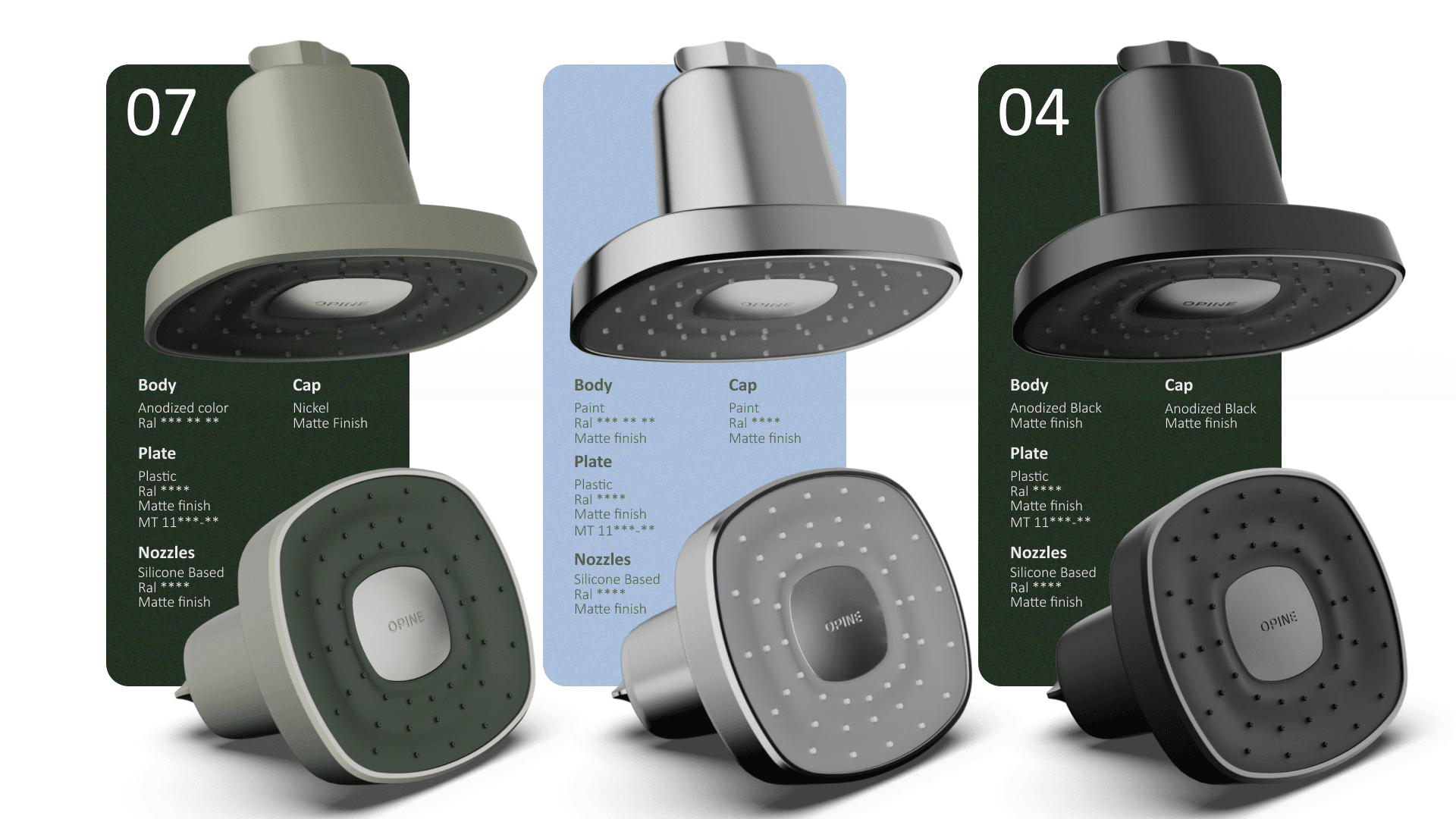
Image courtesy of Opine — opineway.com
Matte black explained the form; green explained the brand.
The green option brought the product closer to the personal care space and gave Opine a distinctive color that could also be used across future products. At the same time, it made the brand’s relationship with nature visible without falling into the typical visual language of an “eco product.”
The CMF development allowed the client to evaluate not only how the product would look, but also what role it could play within the brand.
In the end, we moved forward with Green — Chrome — Black — Nickel as the color schemes for the product family.
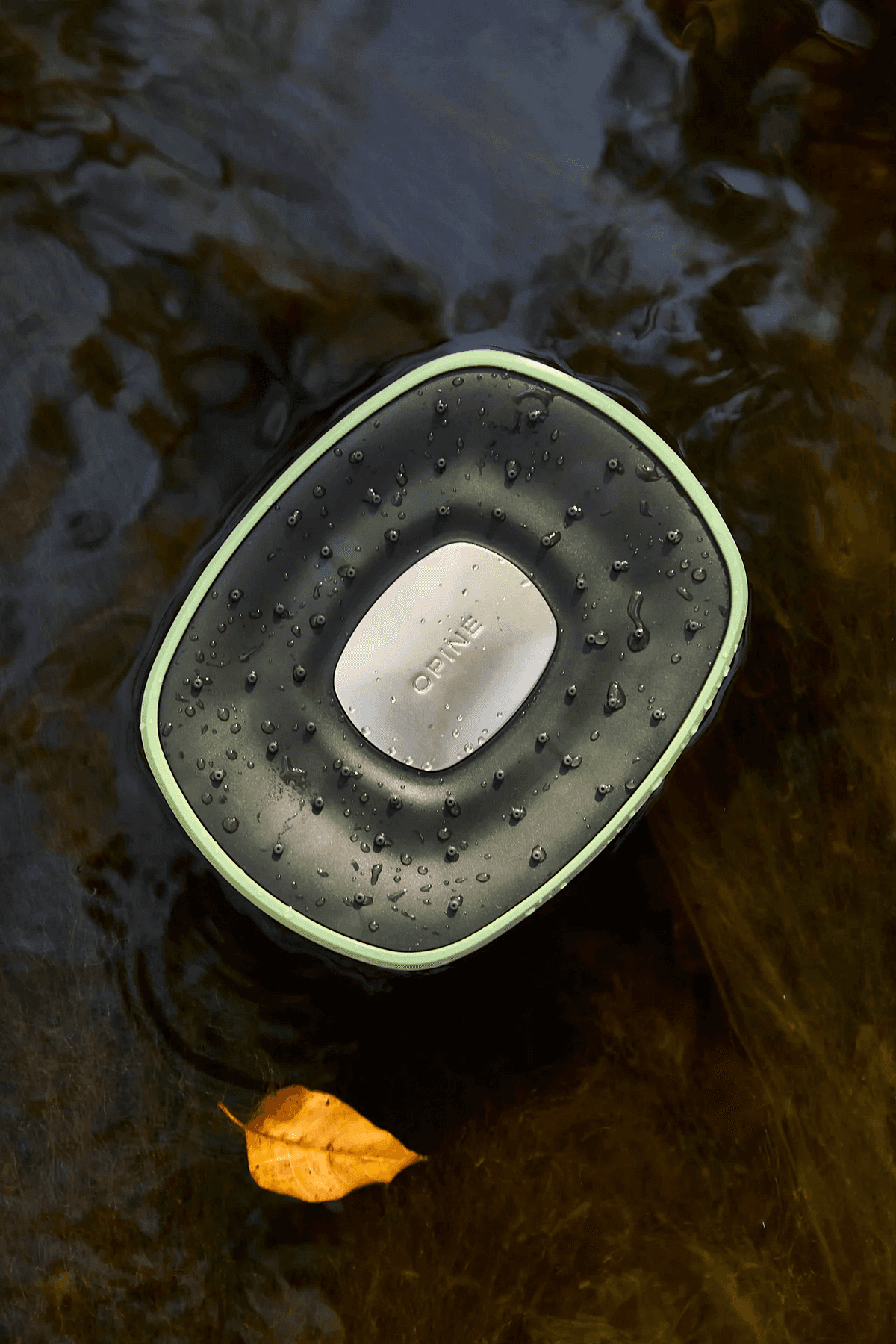
Image courtesy of Opine — opineway.com
The selected green created a distinctive starting point for Opine’s future product family.
What Does the Client Get From This Process?
The visible outputs of a project like Opine include concepts, CAD models, CMF studies, and final visualizations. But these files are not the only thing the client takes away from the process.
The real output of the process is clarity.
An early-stage idea becomes a defined product direction. Personal preferences develop into decisions supported by user experience, engineering requirements, and brand goals. Technical constraints are resolved while the character of the original concept is maintained. Different teams work toward the same product instead of creating disconnected solutions.
At the end of the process, the client should understand not only what the product looks like, but also why it looks and works that way.

Image courtesy of Opine — opineway.com
This understanding becomes important when the product moves into prototyping, production, marketing, and future development. When the thinking behind the product is clear, protecting those design decisions also becomes easier.
—
A concept should not be selected simply because it “feels better.” A surface should not be changed simply because it “looks cleaner.” A color should not be approved just because someone likes it.
Connecting these choices to the user, the brand, engineering requirements, and the future of the product is the designer’s responsibility.
Turning an Idea Into a Product
“A filtered shower head” can be explained in a single sentence. Turning that sentence into a real product, however, requires a much longer chain of decisions.
Most of those decisions are not written on the first page of the brief. They emerge through research, concept development, testing, engineering, and ongoing communication with the client.
Opine’s final form was not the result of one big idea. It came from a combination of smaller decisions, made in the right order, with the reasoning behind them clearly explained and solved together.
If you’d like to learn more about Opine and the product itself, you can visit opineway.com
As a design studio, this is exactly the experience we want to offer: not simply a finished form, but a structured path that starts with the client’s first idea and leads to a product they can understand, believe in, and continue developing.
If you have a clear product idea but have not yet solved its form, user experience, or path toward production, that is exactly the kind of problem we work on.