The Hidden Power of Moodboards
I.Can Erdincmer
Product Designer
Read • 4 Min
At The Real Objects, we’ve decided to start sharing reflections on design processes and our own experiences. As a studio, building a dialogue with our followers, design students, and the wider design community is important to us — we want to create a space where we can learn together.
We chose to begin this series with a topic that plays a critical role in design but is too often overlooked: the moodboard.
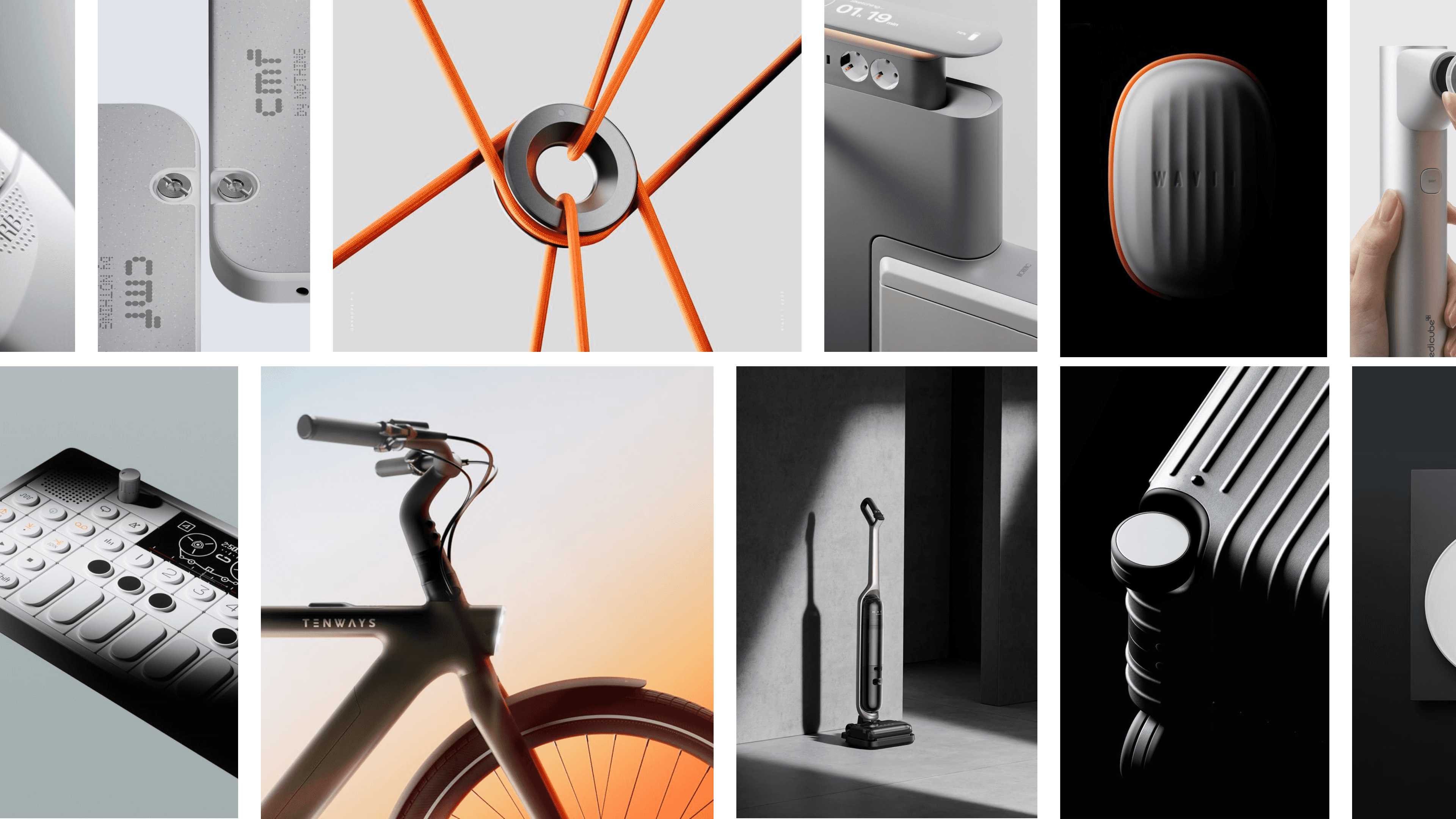
By definition, a moodboard is a collage of images, video snippets, and graphic elements. It’s a way to visualize emotions, forms, or structures that are not yet fully defined or tied to a product. And it’s not limited to designers — marketing teams use it frequently as well.
Yet, moodboards are often underused, especially by students and young designers. I myself misused them many times during my student years. I would dive straight into developing the first idea that came to mind through sketches and technical drawings, and only when preparing for the presentation would I gather a few images that resembled my idea and call it a moodboard.
At the time, it felt practical and even saved me time. But without realizing it, I was constantly drawing on the same limited reservoir. Instead of making moodboards the core of the process, I treated them as an “extra slide” at the end. Looking back now, I can clearly see that this was one of the main reasons why I never produced a truly remarkable project during my studies.
. . .
I realized the true importance of moodboards in my very first job after graduation — a rustic built-in oven project.
The design aimed for an aesthetic that was far removed from the image of built-in ovens common in Turkish and European kitchens. It was targeted at a completely different culture, which meant the color palette, features, and even accessories were all unfamiliar to me.
In the early stages, I often felt inadequate in conversations with the client and kept asking myself:
“Am I really capable of doing this?”
The reality of the design industry is that people are often identified as “oven designers” or “electronics designers.” As a recent graduate with no background in ovens, my first reaction was to think I wasn’t capable. That feeling forced me to question my professional identity and rethink my process.
. . .
Lessons from Mistakes
Over time, I realized something crucial: what matters isn’t the knowledge you already have, but your hunger to learn and your commitment to the process.
Since I didn’t grow up in Eastern Europe or Asia, I had no natural familiarity with rustic kitchen aesthetics. It was something I had to explore, learn, and experience through the project itself — and I never forgot that lesson.
By increasing communication with the team and closely observing production, I eventually learned how to assemble an oven from scratch and even calculate costs. These aren’t skills every designer needs, but they taught me this: the design process isn’t about “knowing everything,” it’s about asking the right questions.
Of course, realizing that wasn’t the end of the story. My next mistake was drowning myself in notes and details. What I really needed was to integrate visual research into the process. That’s when I truly discovered the power of moodboards: not as a way to confirm ideas, but as a way to explore around them, to see new possibilities, and to find visual answers to the questions I was asking.
. . .
The Ongoing Nature of Moodboards
One of the most valuable aspects of moodboards is that, unlike a sketch or a model, they don’t have a beginning or an end. You can’t say, “It’s finished.” Whenever you feel stuck, you can return to them, add new layers, and develop them further.
Today, the very first thing I do when starting a project is collect visuals. But now I don’t organize them by product categories — I organize them by feeling. Because feelings open the door to intuitive design. A moodboard, in this sense, isn’t just a visual collage; it’s a tool that keeps the process dynamic and flexible.
In future articles, I’ll definitely talk more about intuitive design, but for now, I’ll leave it there.
. . .
The design process should never be reduced to finding the “right idea” in one go. It’s about trying different directions, continuously expanding through visual research, and asking new questions that lead to new answers.
And remember: whenever you feel stuck, making a moodboard will open up your perspective.
See you in the next article.
Stay Real!